Stay informed on the latest Truth Social posts from Donald Trump (@realDonaldTrump) without the doomscrolling. Consider it a public service for your mental health. (Why?)

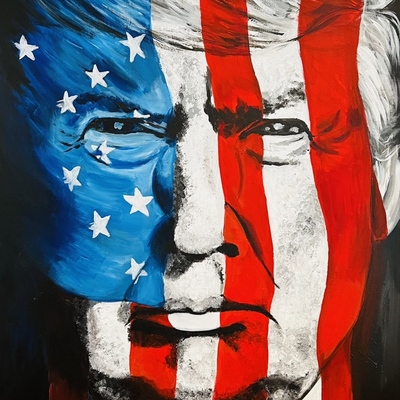
- Art Laffer and Stephen Moore authored 'The Trump Economic Miracle: And the Plan to Unleash Prosperity Again'.
- The book outlines Trump's economic policies and future plans.
- Tariffs have made the nation's national and economic security stronger than ever before.
- Trillions of dollars of investment and jobs are pouring into the country.
- The trade deficit is reaching record lows.
- The nation’s GDP is skyrocketing past 5%.
- America First Policies are required to save the nation from ruin and make it greater, richer, and stronger.
- The best is yet to come.
The post asserts significant past economic achievements (trillions in investment, 5% GDP growth, record low trade deficits) attributed to specific policies like tariffs, and outlines a plan to 'unleash prosperity again.' Such rhetoric, especially from a prominent political figure, signals potential future policy directions (e.g., continued use of tariffs, focus on domestic investment) that could significantly impact corporate earnings, trade relationships, and investor sentiment across various sectors. While not an immediate policy change, the strong claims and future-oriented policy framework are highly relevant for market expectations.
The post discusses 'National and Economic Security' being stronger due to economic policies, particularly tariffs. While tariffs have geopolitical implications, the post does not contain direct threats, ultimatums, or references to military conflict, focusing instead on domestic economic strength. The risk of international conflict escalation based solely on this post is low.
- Commodities: Policies like tariffs could disrupt global supply chains and trade flows, influencing demand and prices for various commodities. The focus on domestic investment could boost demand for industrial metals, while trade tensions could lead to shifts in energy markets.
- Currencies (Forex): 'America First' policies and claims of record low trade deficits, coupled with strong GDP growth, could imply policies aimed at strengthening the US dollar relative to other currencies, impacting pairs like USDJPY and EURUSD.
- Global Equities: The emphasis on domestic investment and 'skyrocketing GDP' suggests a positive outlook for US equities. However, a potential increase in tariffs or 'America First' policies could create uncertainty or negative impacts for global markets and companies reliant on international trade.
- Fixed Income (Bonds): Claims of robust economic growth (5% GDP) and increased investment could lead to expectations of higher inflation and interest rates, potentially pushing US 10Y and 2Y yields higher. Rhetoric promoting domestic strength could also support the dollar, impacting global bond markets.
- Volatility / Derivatives: The strong claims of past economic 'miracles' and future policy intentions, particularly regarding tariffs, can introduce policy uncertainty, potentially leading to increased market volatility (VIX spike) as investors price in future shifts.
- Crypto / Digital Assets: As a risk-on asset, Bitcoin and other digital assets are generally influenced by broad economic sentiment and liquidity. A narrative of strong domestic economic growth and 'unleashed prosperity' could be perceived positively, aligning with risk appetite.
- Cross-Asset Correlations and Systemic Risk: The promotion of 'America First' policies, especially tariffs, implies a potential shift towards protectionism, which can disrupt established global trade relationships and capital flows. This could stress global financial systems and alter typical cross-asset correlations, potentially leading to 'risk-off' environments for some assets.
- Retail Sentiment / Market Psychology: The post directly promotes a book, using highly positive and aspirational language ('economic miracle,' 'unleash prosperity,' 'skyrocketing,' 'best is yet to come'). This type of rhetoric is designed to energize a political base and could influence retail investor sentiment by fostering optimism about future economic performance under specific policies.