Stay informed on the latest Truth Social posts from Donald Trump (@realDonaldTrump) without the doomscrolling. Consider it a public service for your mental health. (Why?)

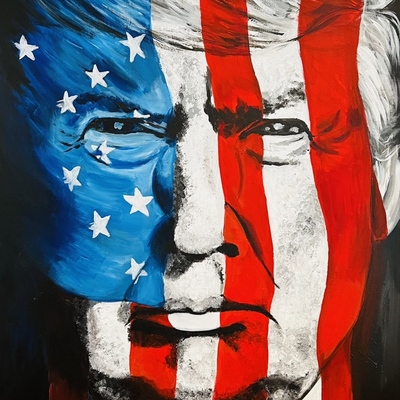
- Donald Trump identifies as 'The Tariff King'.
- The post communicates a decisive and strong posture on trade policy, specifically regarding tariffs.
The post signals a policy direction focused on implementing or increasing tariffs. Tariffs impact S&P 500 companies by increasing the cost of imported raw materials and components, reducing the competitiveness of exported goods, and leading to lower corporate earnings. Sectors heavily reliant on global supply chains (e.g., technology, manufacturing, consumer goods) or those with significant international sales experience negative impacts due to disrupted trade flows and retaliatory measures from other countries. Uncertainty around trade policy weighs on market sentiment and investment decisions.
The embrace of the 'Tariff King' moniker indicates a strong and potentially aggressive trade policy stance. Such policies involve the imposition of tariffs on imported goods, which leads to retaliatory tariffs from other nations. This dynamic creates trade wars, straining international economic relationships and leading to broader diplomatic disputes with major trading partners. While not directly threatening military conflict, aggressive trade postures generate economic instability and friction between nations.
- Commodities: Tariffs disrupt global supply chains and manufacturing, leading to lower demand for industrial commodities like Copper. Increased trade tensions create a flight to safety, supporting Gold (XAU). Oil (WTI) is affected by changes in global economic growth forecasts. Short-Term Watchlist: XAU/USD price action, headlines on specific trade negotiations, industrial metals sentiment. Medium-Term Focus: Global growth projections, inflation trends, central bank policies.
- Currencies (Forex): The US Dollar Index (DXY) sees mixed reactions. Tariffs strengthen the USD if it is perceived as protectionist and a safe haven, or weaken it if trade wars lead to economic slowdowns. Currencies of major trading partners (e.g., EUR, CNH, MXN) weaken against the USD due to trade exposure. Short-Term Watchlist: DXY movements, reactions of currencies of countries targeted by tariffs, risk-off flows. Medium-Term Focus: Central bank policy divergence, global trade balances, sovereign debt concerns.
- Global Equities: Major global equity indices (S&P 500, Nasdaq, STOXX 600, Nikkei 225, Hang Seng) react negatively to increased trade uncertainty and potential corporate profit reductions. Export-oriented sectors and companies with complex international supply chains are particularly vulnerable. Short-Term Watchlist: Futures open, sector-specific reactions (e.g., manufacturing, tech), VIX spike. Medium-Term Focus: Earnings revisions, corporate guidance, global economic data (PMI).
- Fixed Income (Bonds): A flight to safety drives down US 10Y and 2Y yields as investors seek safe-haven assets. Conversely, if tariffs are seen as inflationary, yields rise. Credit spreads widen due to increased corporate risk. Short-Term Watchlist: UST 10Y yield levels, credit ETF flows (e.g., LQD, HYG), TED spread. Medium-Term Focus: Fed's monetary policy stance, inflation expectations, fiscal policy.
- Volatility / Derivatives: Increased trade uncertainty and potential market disruptions cause the VIX to spike, indicating higher market volatility. Options markets price in greater tail risk. Short-Term Watchlist: VIX levels, VIX futures term structure, SKEW index. Medium-Term Focus: Macro policy uncertainty, systemic tail risk, investor hedging activity.
- Crypto / Digital Assets: Bitcoin (BTC) reacts as a risk-on asset, declining with equities if overall market sentiment turns negative. If perceived as a hedge against traditional financial system instability or currency debasement, it sees inflows. Its correlation with tech stocks is a key factor. Short-Term Watchlist: BTC/USD price action, correlation with tech indices, stablecoin flows. Medium-Term Focus: Regulatory developments, macro liquidity backdrop, adoption trends.
- Cross-Asset Correlations and Systemic Risk: Increased trade tensions lead to breakdowns in typical cross-asset correlations, such as both equities and bonds selling off simultaneously (risk-off with inflationary pressure). Signs of liquidity stress or margin calls in less liquid markets are key indicators of systemic risk. Short-Term Watchlist: MOVE index, yield curve movements, gold/USD co-movement. Medium-Term Focus: Central bank responses, global liquidity conditions, geopolitical stability.
- Retail Sentiment / Market Psychology: The rhetoric around tariffs generates strong opinions among retail investors, leading to speculative behavior in certain stocks (e.g., companies seen as beneficiaries or victims of tariffs) or increased engagement with market discussions on social media. Short-Term Watchlist: Social media trends (Twitter/X, Reddit), trading volumes in specific sectors. Medium-Term Focus: Impact of social media on market structure, behavioral finance trends, regulatory attention to retail trading.